Delete, Repeat: The Weird Loop Keeping Gamers Stuck in a Cycle They Can't Escape

Photo by Photo by Francis Ledger on Unsplash on Unsplash
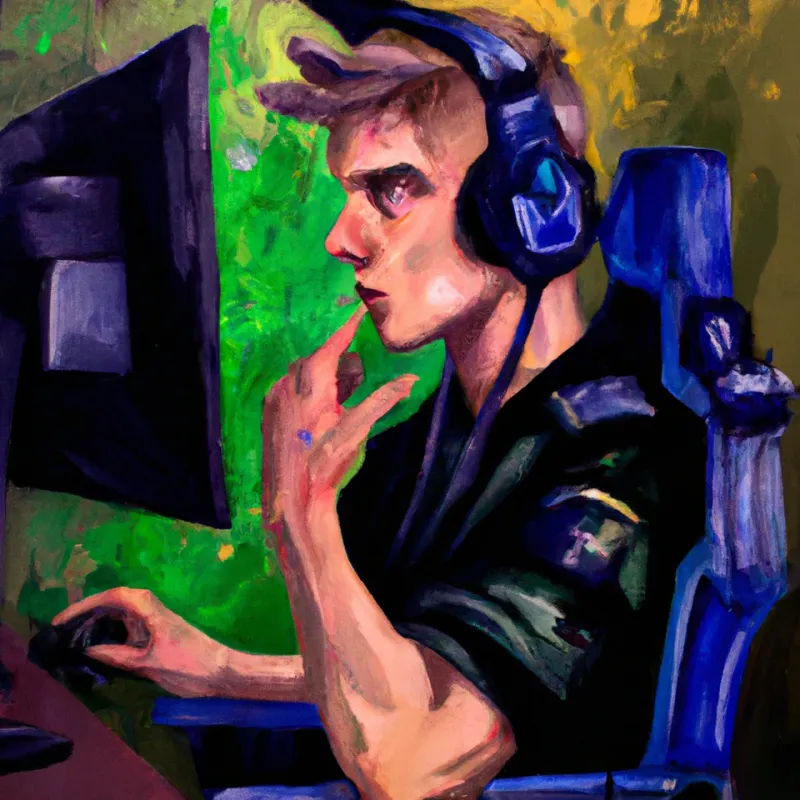
Somewhere right now, someone is staring at a loading screen for a game they waited three weeks to download, and they're already thinking about uninstalling it. Not because the game is broken. Not because their PC can't run it. Just because something feels off — a vague, nagging sense that this isn't the right moment, or the right game, or maybe that they're the wrong kind of player for it.
They'll close the launcher. They'll delete the files. They'll move on.
And then, probably within 72 hours, they'll download something else.
This is the loop. And if you've been anywhere near the gaming internet lately, you already know it's everywhere.
The Numbers Don't Lie (Even If the Experience Does)
Here's the thing about modern gaming that nobody in a marketing deck will tell you: people are accumulating games at a rate that flatly outpaces their ability — or desire — to actually play them. Steam alone sees millions of library additions every week. Console storefronts push flash sales that make buying a $60 game for $4 feel like financial responsibility. Game Pass, PlayStation Plus, and every other subscription service are essentially daring you to download more than you'll ever touch.
Storage has scaled to meet demand. A 2TB external drive costs less than a new release game. There is no practical reason to delete anything.
And yet the uninstall button has never been more popular.
Anecdotally, communities on Reddit and Discord are full of players confessing to what they half-jokingly call "the purge" — a periodic ritual where they wipe their drives and start fresh, not because they need the space, but because the weight of unplayed games has become its own kind of pressure. It's digital clutter anxiety, and it's very real.
Modern Game Design Is Doing This On Purpose (Sort Of)
Let's talk about the first five minutes of a game, because that's where most of the damage happens.
The industry has spent years optimizing onboarding — the tutorial, the intro sequence, the moment you're handed control. The problem is that optimization has started to feel like obligation. Long cutscenes explaining lore you don't care about yet. Mandatory skill trees presented before you've touched a single mechanic. Unskippable cinematics that look incredible but eat 25 minutes before you've made a single decision.
For a player who's already context-switching between three other titles, that friction isn't just annoying — it's a dealbreaker. The game never gets a fair shot because it spent its opening convincing you to leave.
Live service games compound this differently. They don't front-load story; they front-load obligation. Log in daily. Complete the weekly challenges. Don't miss the limited-time event. The implicit message is: if you're not here right now, you're falling behind. For players who already feel behind on their backlog, that pressure isn't a hook — it's a reason to bail entirely.
The Paradox of Too Much Choice
There's a concept in behavioral psychology called the paradox of choice — the idea that more options don't make decisions easier, they make them harder and less satisfying. Barry Schwartz wrote a whole book about it. It applies to cereal aisles and cable packages and, as it turns out, game libraries with 300 titles in them.
When you can play anything, the question of what to play becomes genuinely paralyzing. Players describe opening their launcher, scrolling through options, feeling a kind of low-grade dread, and then just closing the whole thing and watching something on Netflix instead. The game that gets deleted is often just the most recent casualty of that paralysis — the one that happened to be open when the frustration peaked.
It's not really about that game. It's about the whole system.
The Re-Download Tells the Real Story
Here's the detail that makes this whole thing fascinating: players almost always come back.
Not to every game, sure. But the pattern of delete-and-return is so common that it's basically a genre of gaming experience now. Players will wipe a title, spend a few weeks away, see someone streaming it, feel the pull again, and re-download it — sometimes multiple times over the course of a year.
What changed? Usually nothing about the game itself. What changed is the player's context. They finished something else. They had a week with less going on. They saw a clip that made the game look fun again rather than like homework.
This suggests the uninstall isn't really a rejection. It's a delay mechanism. A way of telling yourself not now without having to consciously decide never. The problem is that "not now" repeated enough times starts to look a lot like "never" from the outside, and game developers tracking engagement metrics can't always tell the difference.
What This Says About How We Actually Consume Entertainment Now
Zoom out for a second, because this isn't just a gaming story.
The same dynamic shows up in streaming. People add movies to their watchlists and never touch them. They start series and abandon them mid-season. They pay for platforms they log into twice a year. The behavior is consistent across entertainment formats: we collect intent without following through on it, and the gap between what we mean to engage with and what we actually engage with keeps getting wider.
Gaming just makes the anxiety more visible because the uninstall button is right there, the file sizes are enormous, and the time investment required is measured in dozens of hours rather than two. The stakes feel higher, so the avoidance response kicks in harder.
We're not bad at gaming. We're bad at managing infinite options in a finite life. And the entertainment industry — gaming especially — has spent years making the supply side of that equation exponentially larger without doing much about the demand side at all.
Is There a Fix?
Some developers are trying. Shorter games are having a genuine moment. Tight, 6-to-10-hour experiences with clear endpoints are getting critical love and real sales numbers because they fit into how people actually have time to play. The "one more run" roguelike format works for similar reasons — it's designed around sessions, not marathons.
But the live service machine isn't going anywhere, and neither are the massive open-world games that ask for 80-hour commitments. Those will keep generating the same delete-and-regret cycle for the same reasons they always have.
Maybe the honest answer is that the uninstall button isn't the problem. Maybe it's the closest thing we have to a pressure valve in a hobby that's quietly become overwhelming. Delete the game. Clear the mental space. Come back when it feels right.
The feed will still be there. It always is.