No Exit: The Quiet War Over Whether You're Allowed to Stop Playing
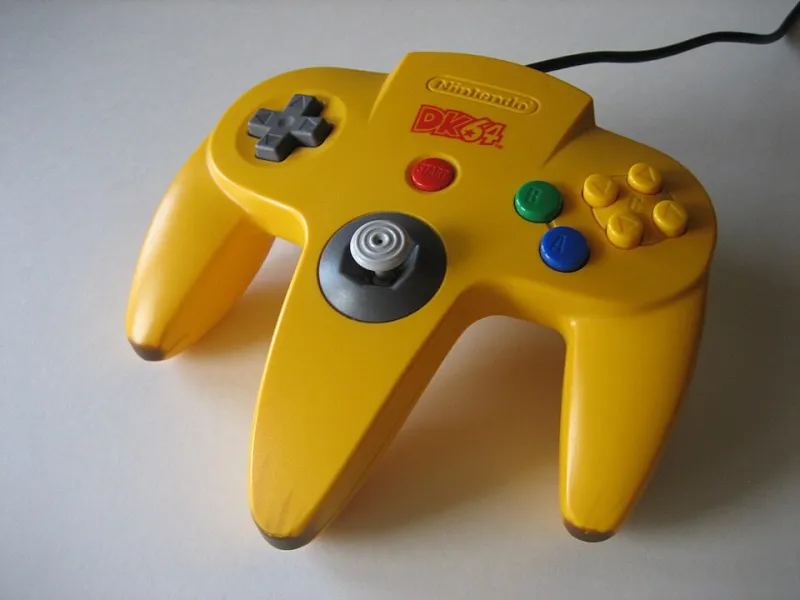
Photo: AstraxVZ, CC BY-SA 4.0, via Wikimedia Commons
You're thirty minutes into a boss fight. Your phone buzzes. The dog starts barking at something outside. Your roommate needs you for literally ten seconds. You reach for the pause button and—nothing. The game keeps going. The boss keeps swinging. You die, lose your progress, and start over from a checkpoint that might as well be in another zip code.
This isn't a bug. It's a design decision. And it's becoming more common by the year.
Game developers have been quietly chipping away at traditional pause mechanics for over a decade, and the conversation around why they're doing it—and what it costs players—has finally started getting loud enough to hear.
What 'Always-On' Actually Means
The phrase 'always-on gameplay' gets thrown around a lot in design circles, usually framed as a feature. The idea is that removing pause creates a seamless experience, keeps players locked into the world, and prevents the kind of cheese strategies where you'd freeze the frame to carefully line up a shot or think through a puzzle without pressure.
On paper, it sounds like a reasonable creative choice. In practice, it's a lot messier.
Take Elden Ring, which became a cultural moment partly because of how unforgiving its systems are. The game technically has a pause function—buried inside the menu system in a way that isn't obvious and doesn't work in all situations. Players discovered the workaround organically, and it spread across Reddit and YouTube like wildfire. FromSoftware didn't advertise it. They didn't explain it. It just existed, quietly, like a fire exit behind a bookshelf.
The fact that players celebrated finding a hidden pause mechanic says everything about the demand that was always there.
Designers Speak Up (Sort Of)
We talked to a few game designers—some at mid-size studios, some indie—who were willing to share their thinking on the trend, though most asked to stay anonymous because, as one put it, 'this topic makes people on both sides very angry very fast.'
One designer who works on action RPGs framed it this way: 'The original argument for removing pause was about purity. You want the player to feel like they're actually in the world. Pausing breaks that. But what we didn't fully reckon with is that 'the world' is a game, and the player has a real life happening around them.'
Another designer, who specifically works on multiplayer titles where pause is architecturally impossible, pushed back a little: 'Multiplayer is different. You can't pause a shared experience. But the mistake is when studios apply that same logic to single-player games just because it sounds cool or hardcore.'
The 'hardcore' framing is worth unpacking. There's a persistent myth in gaming culture that more friction equals more respect for the player—that making something harder to stop playing is somehow honoring the experience. But several designers we spoke with are starting to question whether that logic holds up, or whether it's just a convenient cover for something less flattering.
The Speedrunning Workaround Economy
If anyone has figured out how to game the no-pause problem, it's speedrunners. These communities have built entire toolkits around manipulating game states, and the removal of traditional pause has just become another obstacle to route around.
Load-based pausing, lag exploitation, and hardware-level tricks have all become part of the speedrunning vocabulary specifically because developers closed the front door. Runners on platforms like Twitch and YouTube have turned these workarounds into content in their own right—there's an entire genre of 'how I pause an unpausable game' videos that pull serious view counts.
What's interesting is that speedrunners aren't doing this to cheat. They're doing it because their hobby requires precision control over game state, and developers have made that harder. The irony is that games designed to be 'unpaused' often end up being studied more mechanically, not less, because the community has to dig deeper to find any wiggle room at all.
The Accessibility Argument Nobody Wants to Have
Here's where the conversation gets uncomfortable: removing pause isn't just a minor inconvenience. For a significant portion of players, it's a genuine barrier.
Parents playing after kids go to bed. People with chronic illness or disability who need to step away without warning. Players managing anxiety who need the ability to breathe before a stressful sequence. Caregivers who can't predict when they'll be pulled away from the screen.
The Americans with Disabilities Act doesn't cover video game design in any meaningful way, and accessibility advocacy in gaming—while growing—is still fighting for basic features like subtitle sizing and colorblind modes. Pause is so fundamental that it rarely even makes the accessibility checklist, because who would remove it?
Studios would. Increasingly do. And the pushback from accessibility advocates has been consistent: framing the removal of pause as 'immersive' is a choice that treats a subset of your player base as acceptable collateral damage for an aesthetic decision.
One indie developer we spoke with, who specifically designs games with robust accessibility options, put it plainly: 'The argument that pause breaks immersion assumes your player has no life outside the screen. That's not immersion. That's just ignoring who's actually playing your game.'
The Psychological Cost Nobody's Measuring
Beyond accessibility, there's a subtler issue that's starting to get attention in gaming wellness circles: what does it do to a person to play a game they can't stop?
This isn't about addiction in the clinical sense. It's about agency. The ability to pause is, at its core, the ability to say I'm in control here. Strip that out and you've changed the fundamental power dynamic between player and game. You've made the game the authority, not the player.
Some researchers studying gaming behavior have started connecting the dots between always-on design and elevated stress responses during play sessions. The logic tracks: if you know you can't stop without consequence, your brain treats the session differently. It's not relaxation. It's performance.
And performance under conditions you don't control is just... stress.
What Comes Next
There are signs of a correction happening. Some studios have started adding 'rest mode' features—essentially soft pauses that freeze the game state without fully suspending it. Others have added explicit accessibility pause options that exist separately from the main gameplay loop. It's not universal, but it's movement.
The player feedback loop is also doing its work. Games that launch without adequate pause functionality reliably catch heat in reviews and community spaces, and that heat is starting to show up in design postmortems.
The bigger question is whether the industry treats this as a core design value or a PR fix. Because the difference matters. One produces games that respect the person holding the controller. The other produces games that add a pause button to avoid bad press while leaving the underlying philosophy intact.
You should be able to stop playing a game whenever you want. That shouldn't be a radical position. But here we are, in 2024, still having to make the case for it.