Subscribed to Forgetting: The Psychological Playbook Gaming Services Use to Keep Your Money
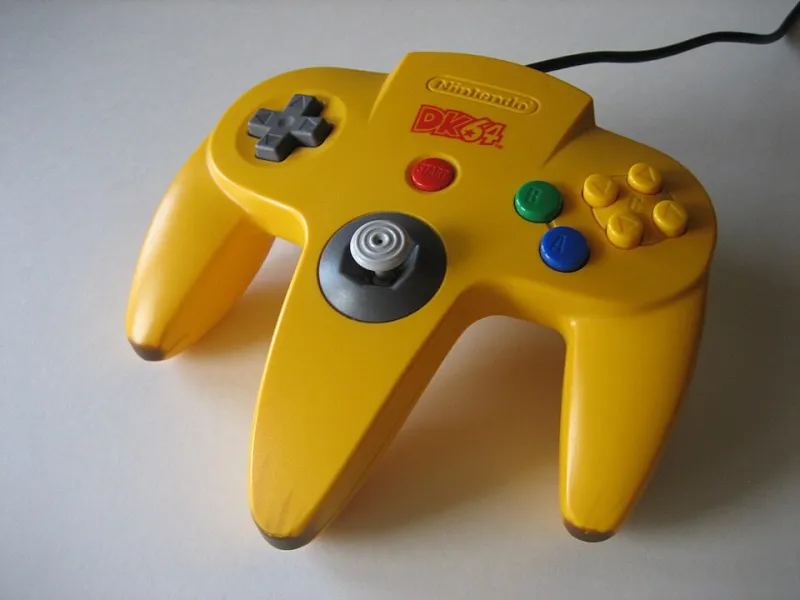
Photo: AlexvH, CC BY-SA 3.0, via Wikimedia Commons
There's a good chance you're paying for a gaming subscription right now that you haven't seriously used in weeks. Maybe months. And here's the thing — the company running that service is completely fine with that. Actually, they're counting on it.
Welcome to the loyalty trap, where the best customer isn't the one who plays every day. It's the one who intends to play every day but never quite gets around to it.
The Library That's Designed to Overwhelm You
Game Pass currently lists somewhere north of 400 titles depending on the tier you're paying for. PlayStation Plus Premium pushes even further, dangling a catalog that blends current releases with decades-old classics. On paper, it sounds extraordinary. In practice, it functions more like a storage unit you rent but never visit.
This isn't accidental. Library size is a marketing metric first and a gameplay metric second. When Microsoft announces "over 400 games," the number is doing a job — it's creating a sense of abundance that makes the monthly fee feel justified before you've touched a single title. Cognitive researchers call this the "potential value bias," where people overestimate how much they'll use something based on its perceived scope. Gaming subscription services have quietly turned this bias into a business model.
The rotation system compounds this. Games leave catalogs. New ones arrive. There's always something "coming soon" dangled in front of you, and always something disappearing that you told yourself you'd get to. That churn isn't just content management — it's a psychological renewal cycle. Every rotation gives subscribers a fresh reason to stay without necessarily giving them a new reason to play.
What You're Actually Paying For vs. What You Think You Are
Let's be direct about the math. At $14.99 a month for Game Pass Core or $17.99 for Game Pass Ultimate, you're looking at roughly $180–$216 annually. PlayStation Plus Premium runs you up to $159.99 a year if you catch a deal, more if you don't. That's real money.
Now consider what industry data suggests about actual usage. A 2023 survey from Deloitte found that nearly 40% of U.S. consumers reported paying for at least one subscription service they rarely or never used in a given month. Gaming subscriptions weren't broken out specifically, but anecdotal reporting and forum data from communities like r/GamePass consistently show a pattern: people subscribe during a game launch window, play heavily for two to three weeks, then coast on inertia.
The services know this. They track engagement metrics obsessively — daily active users, session length, title completion rates — but they don't publish them publicly. What they do publish is subscriber counts and library size, because those numbers tell the story they want told. The gap between "subscribers" and "active players" is where the profit lives.
The Rotating Carrot: How Content Scheduling Keeps You Hooked
Spend any time in gaming communities and you'll notice a recurring conversation: "Is [game] still on Game Pass?" It happens constantly, and it's not a bug in the system. It's a feature.
Microsoft and Sony both use staggered content calendars that ensure there's always something worth staying for on the horizon. A first-party title drops day one on Game Pass — that's the headline move, the one that gets press coverage and new sign-ups. But the quieter strategy is in the mid-tier additions: beloved indie titles, cult RPGs, games that have been on wishlists for years finally appearing in the catalog. These additions land without major fanfare but reliably trigger the same mental calculus: I should keep my subscription just a little longer.
This is the rotating carrot. It doesn't need to be a blockbuster. It just needs to be compelling enough to delay cancellation for another billing cycle. And another. And another.
The Cancellation Friction Machine
Every major gaming subscription service has engineered its cancellation flow to create just enough friction to slow you down. It's not as aggressive as some cable providers — nobody's forcing you to call a retention hotline — but the design choices are deliberate.
Cancellation is rarely one tap. It typically requires navigating account settings, passing through a confirmation screen that highlights what you'd lose, and sometimes sitting through a "pause instead of cancel" offer. These aren't user experience oversights. They're conversion tactics borrowed directly from SaaS playbooks, applied to an entertainment context where the emotional stakes ("but what about all those games I was going to play") are particularly high.
The "games with gold" and "free monthly games" framing also creates artificial sunk-cost thinking. If you've been "claiming" free titles every month — even ones you haven't played — canceling feels like abandoning an investment. You've been collecting. Stopping means losing access to a library you technically own nothing in.
What Gamers Are Actually Getting
To be fair, gaming subscriptions aren't a scam. If you're an active player who rotates through titles, the value proposition is genuinely strong. Playing three or four games a month that would've cost $30–$70 each at retail makes the math work clearly in your favor.
The problem is that the services are structured around the aspiration of that player, not the reality of most subscribers. The average American adult has roughly 2–3 hours of leisure time per day, and gaming competes with streaming, social media, exercise, and everything else in that window. A 400-game library isn't a gift to someone with 15 hours of gaming time a week. It's a source of decision paralysis.
And decision paralysis, as it turns out, is subscription gold. When you can't decide what to play, you don't cancel. You just... stay.
Unlocking the Feed — On Your Terms
So what's the move? A few practical approaches if you want to stop paying for the privilege of forgetting:
Audit your actual play time. Most platforms have usage dashboards buried in account settings. Pull your numbers. If you played fewer than 10 hours last month, run the math on whether a subscription or individual purchases make more sense for your habits.
Treat the library like a menu, not a buffet. Pick one or two titles per month with intention before the month starts. Subscription libraries reward decisiveness, not browsing.
Set a calendar reminder for renewal dates. The services won't remind you. That's the point.
The subscription model isn't going anywhere — it's too profitable and, when used actively, too genuinely useful. But knowing how the psychological machinery works is the first step toward using it instead of being used by it. At H55CU, we're all about unlocking the feed on your terms. That starts with knowing what you're actually paying for.