Who's Still on the Mic? The Slow Fade of Gaming's Friend Groups
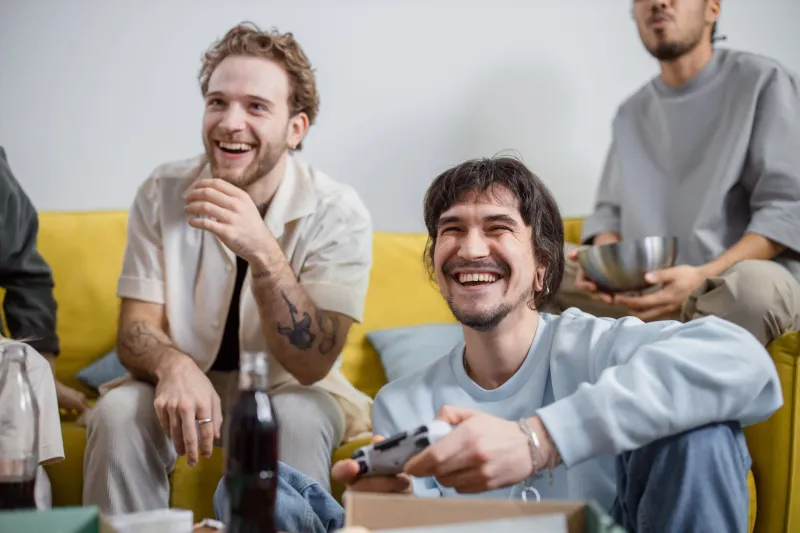
There was a time — not that long ago, honestly — when logging on meant logging on with people. Not strangers. Not a 90-second queue. Your people. The group chat that turned into a party chat. The Friday night that started with 'yo, who's on?' and ended at 2 a.m. with someone's dad yelling about the router.
If you're reading this, there's a decent chance that group doesn't exist anymore. Not because of a blowup. Not because of anything dramatic at all. It just... dissolved.
The Quiet Breakup Nobody Announces
Marcus, 34, from Columbus, Ohio, still has the Discord server. Fourteen guys, a decade of history, channels nobody's posted in since 2022.
"Nobody left," he told us. "That's the weird part. Everybody just got funneled into different stuff. I'm deep in one extraction shooter, my buddy got sucked into an MMO, another guy only logs on when his kid's asleep. We're all still gamers. We just stopped being a group gamer."
Sound familiar? The drift is almost never a fight. It's frictionless. And that's kind of the problem.
Modern gaming is engineered, brilliantly, to make sure you never need anybody. Matchmaking will find you twelve teammates in under a minute. Battle passes give you a personal to-do list that doesn't care who's online. Recommendation engines nudge you toward whatever's trending solo. Every system is optimized for you-as-an-individual, and the side effect is that the lobby — the actual social room where friendships got maintained — quietly stopped being necessary.
Convenience ate the clubhouse.
How We Used to Do It
Ask anyone over 30 about their formative gaming years and the memories aren't really about the games. They're about the logistics. Splitting four controllers three ways. The split-screen TV with a towel taped over half the screen so your opponent couldn't peek. Driving to a friend's house with an Xbox in a backpack. Halo LAN nights in a basement that smelled like pizza rolls.
The game was the excuse. The room was the point.
Online play preserved that for a while — party chat was basically a phone call that never hung up. But somewhere along the way, the ritual changed. You stopped calling people and started joining queues. The lobby became a loading screen you skip.
The Drift, Documented
It's not just nostalgia talking, either. The structure of modern live-service games actively fragments friend groups. When one person's battle pass expires Thursday and another's doesn't, when one game demands four hours and another twenty minutes, when progression is tied to individual accounts rather than shared sessions — the scheduling math stops working. Nobody cancels plans. The plans just stop getting made.
One friend group we spoke to — six guys who met in a college dorm in 2011 — tried to quantify it. Their group chat logs show a steady decay: nightly sessions in 2016, weekends-only by 2019, a group-wide attempt at a reunion game in 2021 that lasted nine days.
"The reunion attempt is the funniest, saddest part," one of them said. "We all bought the same co-op game specifically to hang out. Then everyone kept saying 'I'll hop on after I finish my dailies.' The dailies killed the reunion."
The Games Trying to Fix This
Here's the genuinely hopeful part: some developers have noticed the hole we've dug ourselves into, and they're building games that treat the group — not the individual — as the core unit.
Lethal Company and its kin proved something wild: a janky co-op horror game with no progression grind, no battle pass, and no matchmaking got groups of friends talking on the mic again like it was 2009. The design secret? It's only fun together. There's no solo version of the experience to retreat to.
Deep Rock Galactic built an entire culture around it — four classes that genuinely need each other, a community whose motto is literally "Rock and Stone," and zero pressure to optimize your evening. You drop in, you dig, you leave with a story.
Helldivers 2 deserves mention too. Friendly fire is always on, chaos is constant, and half the fun is yelling at your buddy for calling a stratagem on top of your head. It's a game that manufactures moments worth retelling — and retelling is the glue.
Even Nintendo keeps quietly carrying the torch with stuff like the most recent Mario Party and the Switch's anything-goes local multiplayer library, betting that couch time is still worth engineering for.
The common thread: these games don't just support playing with friends. They require it, and they make the hanging out — the banter, the blame, the dumb plans — the actual content.
Getting the Band Back Together
So what do you do if your lobby's a graveyard? The groups that have successfully reformed tend to follow a few patterns:
- Pick one game and commit to it as a group — not five games five people are separately grinding.
- Lower the bar hard. One hour, one night a week. Consistency beats marathon sessions that never get scheduled.
- Choose chaos over competition. Ranked ladders create pressure; co-op chaos creates stories. Stories are what bring people back.
- Someone has to be the one who sends the message. Every revived friend group has a founder. It might as well be you.
The tech didn't kill the friend group lobby. It just stopped making it easy. Which means bringing it back is a choice now instead of a default — and honestly, there's something kind of nice about that.
Marcus from Columbus has a reunion scheduled. Same Discord, same fourteenth channel. New game, one night, no dailies allowed.
"If it's anything like the old nights," he said, "somebody's dad is still going to yell about the router."