Confessions at 3 A.M.: Inside the Lobbies Where Nobody's Keeping Score
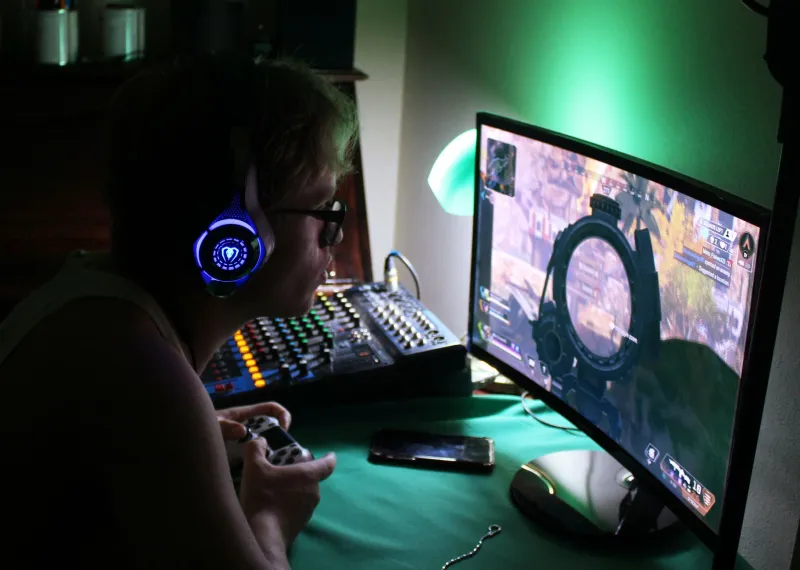
Somewhere around 2:47 a.m. Eastern, the internet gets honest.
The ranked grinders have rage-quit their last match. The content creators have ended their streams. The kids are, presumably, asleep. What's left on the servers is a population most people never see: night-shift workers on break, insomniacs staring at the same ceiling they stared at yesterday, college students who swore they'd stop three hours ago, and a guy in Perth who's just getting started with his Saturday.
And in the voice chats these people inhabit, something strange happens. The game becomes the background. The talking becomes the point.
The Shift Change Nobody Talks About
Ask anyone who regularly plays between midnight and dawn and they'll describe the same phenomenon: the lobby has a personality, and it changes with the clock.
"Daytime lobbies are all business," says Marcus, a 34-year-old ICU nurse in Ohio who plays after twelve-hour shifts. "People are trying to rank up, trying to prove something. But at 3 a.m.? Nobody cares if you whiff. You've got four strangers who are all awake for reasons they don't fully understand, and somebody just starts... talking."
Marcus says his regular squad — assembled entirely from random matchmaking over two years — has been through a divorce, a layoff, and a cancer scare together. He's never met any of them. He talks to two of them more than his own brothers.
There's a structural reason for this. Daytime multiplayer is transactional: short matches, quick queues, teammates you'll never see again. Overnight play is often slower, weirder, and populated by people with nowhere else to be. Games with long sessions or low-stakes loops — think open-world servers, co-op survival, even casual racing lobbies — become de facto hangouts. The match is just an excuse to keep the mic on.
Improv Night, Population: Insomniacs
Not every overnight lobby turns into a support group. Some turn into something closer to a comedy club with no cover charge.
Jules, a 22-year-old in Arizona who streams occasionally but mostly "just hangs out," describes the 3 a.m. lobby as "an improv stage where everyone's too tired to be self-conscious." Bits develop over hours. Inside jokes calcify into mythology. A player named after a discontinued soda became a recurring character in one lobby she frequented — complete with a fan-made soundboard.
"The daytime internet is performative," she says. "Everybody's clipping everything. At night, nobody's recording. That's why people open up. There's no audience. There's just us."
That lack of an audience might be the whole key. Psychologists who study online communities have long noted that anonymity plus small group size plus low stakes equals higher self-disclosure. The 3 a.m. lobby accidentally engineered the perfect confessional booth: nobody knows your real name, nobody's clipping the moment, and everyone present is, by definition, also awake at an hour society considers a mistake.
The International Handoff
There's also a geography to the overnight lobby. As the American East Coast winds down, the West Coast settles in. By 4 a.m. Eastern, Australian and Southeast Asian players are flooding in for their evening prime time. The result is a daily handoff — a relay of strangers passing the same server through different time zones.
For players like Deshawn, a warehouse worker in Georgia, that handoff is the appeal. "I've got a buddy in Manila now. We've never been awake at the same time for more than ninety minutes, but we've been talking every night for a year." Their friendship exists entirely in a sliver of overlapping consciousness — a ninety-minute window where one man's lunch break meets another man's bedtime.
Why Nobody Sleeps On It
The obvious question: why not just use a regular social app? Why does this need to happen inside a game?
The answer, according to almost everyone we spoke to, is that the game provides cover. Talking about your life to a stranger over voice chat is awkward. Talking about your life while also driving a fake car off a fake cliff is easy. The shared activity gives hands something to do and eyes somewhere to look. It's the digital equivalent of a long drive with a friend — conversation flows because no one's making eye contact.
The 3 a.m. lobby won't show up in any platform's marketing. It's not a feature; it's a byproduct. But for a few million night owls, it's become something the daytime internet promised and never delivered: a room where nobody's performing, nobody's selling anything, and the only requirement for belonging is that you, too, couldn't sleep.
Log off before sunrise, though. Some things are better left unclipped.