Cartridges Don't Lie: Why Serious Collectors Are Building Physical Vaults Before the Digital Era Collapses
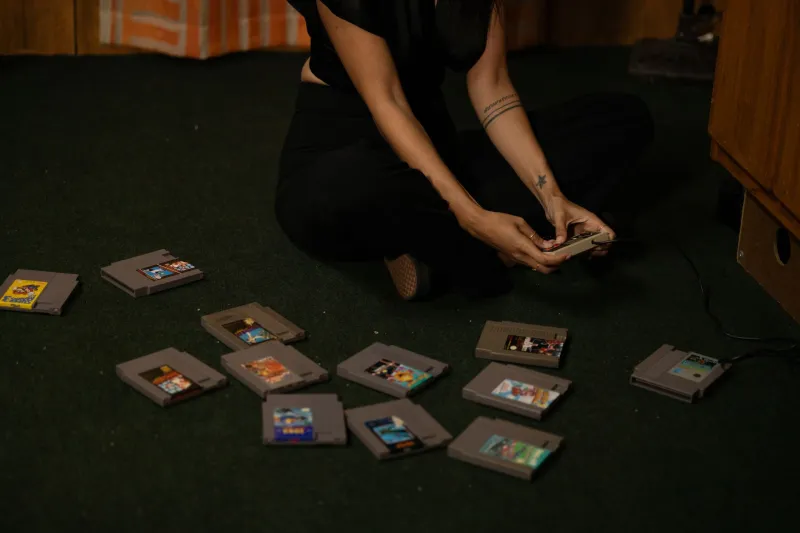
Somewhere in a spare bedroom in Columbus, Ohio, Marcus Delray has a problem most people would kill to have. Three floor-to-ceiling shelves packed with Super Nintendo cartridges, a climate-controlled cabinet holding mint-condition Sega Saturn imports, and a growing stack of PlayStation 2 cases that his wife has gently suggested might need their own zip code. Marcus isn't a reseller. He's not trying to flip anything on eBay. He's building what he calls, without a hint of irony, a survival kit.
"People think I'm being dramatic," he says, pulling out a Japanese copy of Panzer Dragoon Saga like it's a rare artifact from a lost civilization — because functionally, it kind of is. "But I watched games I paid real money for just vanish. Not glitch out. Not get delisted for a week. Just gone. And nobody at the company even sent an email."
Marcus isn't alone. Across the country, a quiet but intensifying movement of collectors is treating physical media not as a hobby but as a hedge. Against corporate decisions. Against licensing nightmares. Against the slow, quiet death of servers that nobody announces until the login screen stops loading.
The Trust Has Been Broken, and Collectors Know It
Ask anyone deep in the physical media collecting world why they do it, and you'll hear variations of the same story. They bought something digitally. They loved it. Then one day it wasn't there anymore — either pulled from their library, made unplayable by a forced update, or quietly delisted after a licensing deal expired. The game existed. They paid for it. And then, in every practical sense, it stopped existing.
That experience, multiplied across millions of players over the past decade, has created a growing constituency of people who simply don't trust digital ownership anymore. And their response has been to go analog with the kind of intensity usually reserved for people who also stockpile freeze-dried food.
Jessica Tran, a collector based in Portland who specializes in obscure PC formats from the late '90s — we're talking big-box DOS games, jewel cases with manuals thicker than most paperbacks — frames it bluntly: "When you own a cartridge, nobody can take it back. The company can go bankrupt tomorrow. The servers can die. Some executive can decide the IP isn't worth maintaining. None of that matters. I still have the cart. I still have the game."
There's a philosophical clarity to that position that's hard to argue with. Physical media has its own problems — it degrades, it gets lost, it can be damaged. But it doesn't require a corporation to remain solvent, cooperative, or legally unentangled to keep working.
What Formats Are They Hoarding?
The collecting landscape is broader than most outsiders assume. Yes, NES and SNES cartridges are the flagship obsession, and prices for rare titles have climbed to eye-watering levels over the past five years. But the real action — and the real ideological commitment — often lives in stranger corners.
Sega CD games. Neo Geo AES cartridges. TurboGrafx-16 HuCards. PC-FX discs. 3DO titles. These are formats that never dominated the market, which means the games that survived on them exist in genuinely limited quantities. For collectors, that scarcity isn't a bug — it's the point. A game that only ever shipped 10,000 physical copies is a game that will always have a physical copy somewhere in the world, regardless of what any streaming service or digital storefront decides.
Derek Okonkwo, who runs a small YouTube channel documenting his collection from his apartment in Atlanta, has become something of a community hub for collectors who focus on obscure formats. "The mainstream stuff, people get it," he explains. "They understand why a sealed copy of EarthBound is worth money. But when I talk about collecting for formats like the Amiga CD32 or the Pippin, people look at me like I'm speaking another language. Those are the formats where you're genuinely preserving something that would otherwise disappear completely."
The Economics Are Getting Weird
Here's the tension nobody in the collecting community fully loves to discuss: the same distrust in digital ownership that's driving people toward physical media is also driving prices into the stratosphere. When a sealed copy of Stadium Events for NES sells for over $40,000, the line between preservation and speculation gets genuinely blurry.
Most serious collectors will tell you they're not in it for the investment angle — and many of them mean it. But the market doesn't care about intentions. Retro game prices have outpaced inflation for most of the past decade, and the influx of buyers who are motivated partly by distrust of digital platforms has added real fuel to that fire.
Marcus acknowledges the weirdness directly. "I'm not gonna pretend the stuff I bought ten years ago hasn't gone up in value. It has. But if I sell it, then I'm just back to relying on digital storefronts, which is exactly the thing I was trying to avoid. So the value is almost theoretical to me. The point is that I have it."
Playing the Long Game
What's striking about the collectors driving this movement is how long their thinking horizon is. They're not planning for next year. They're thinking about what happens in twenty years, when today's digital-only titles may be completely inaccessible — not because of any dramatic corporate collapse, but simply because the infrastructure required to run them quietly stopped being maintained.
Jessica has started organizing local meetups in Portland where collectors share preservation techniques — how to clean cartridge contacts, how to store optical media properly, which clone hardware is reliable enough to use for regular play versus which should stay on a shelf. It's the kind of practical, community-driven knowledge transfer that feels almost anachronistic in 2025, but it's also exactly the kind of thing that keeps games alive when the companies that made them have moved on.
"Digital is convenient," she says, rearranging a shelf of LucasArts point-and-click adventures in big-box PC format. "Nobody's saying it isn't. But convenience and permanence are two completely different things, and people are finally starting to figure that out."
What This Actually Says About Us
There's something bigger happening underneath the cartridge hoarding and the climate-controlled storage cabinets. The physical media revival is, at its core, a story about eroded trust. About what happens when an industry trains its customers to pay for access rather than ownership, and then repeatedly demonstrates that the access can be revoked without warning, without recourse, and without refund.
The collectors building analog libraries aren't Luddites. Most of them have digital libraries too — Steam accounts with hundreds of games, subscriptions to multiple services, the full suite of modern convenience. They're not rejecting the digital world. They're just refusing to bet everything on it.
Derek puts it the cleanest: "I love streaming. I love digital downloads. I love all of it. But I also know that a cartridge I bought in 1994 still works today, and I can't say that about a single digital purchase I made in 2014. That's not nostalgia. That's just math."
The feed is great. The feed is convenient. But some people are quietly, methodically making sure they've got a backup plan for when the feed decides to forget you.