You Bought It, They Changed It: The Silent Rewrites Happening Inside Your Game Library
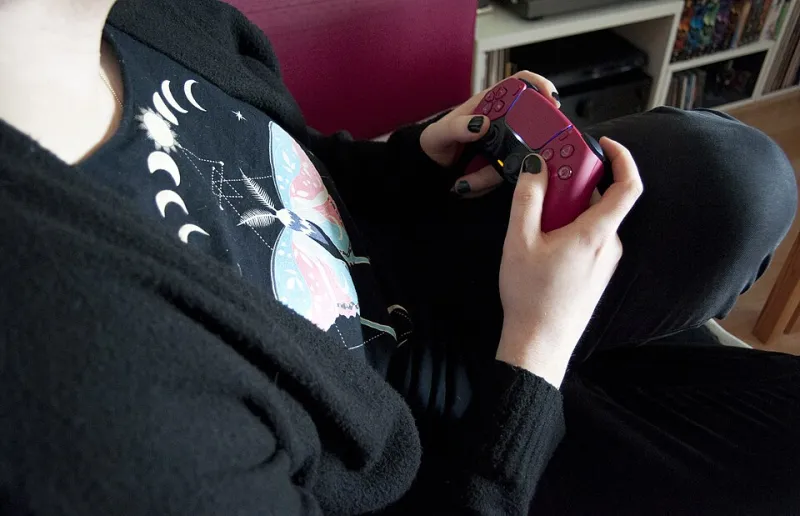
Photo: InclusiveGameLab, CC BY-SA 4.0, via Wikimedia Commons
Somewhere on a Steam library shelf, a game is not the same game it used to be. The ending changed. A character's motivation was rewritten. A mechanic that defined the first hundred hours of play was quietly removed in a patch nobody made a big deal about. The store page still shows the same screenshots. The reviews still reference content that no longer exists. But the experience? Gone.
This is the part of modern gaming that doesn't get talked about enough — not the big drama patches, not the headline-grabbing controversies, but the slow, methodical editing of games that players already paid for. It's happening constantly, across platforms, across genres, and across studios of every size.
The Patch That Changed Everything (Quietly)
Most players assume patches are additive — bug fixes, performance improvements, maybe some new content if you're lucky. And that's often true. But studios have increasingly used the patch pipeline to do something more aggressive: revise the creative work itself.
Take narrative rewrites. Several major titles over the past decade have had dialogue altered, cutscenes removed, or character arcs adjusted post-launch — sometimes for localization reasons, sometimes in response to community backlash, and sometimes seemingly just because the developers changed their minds. The result is a kind of living document approach to game design, where the "final" version of a game is perpetually provisional.
Balance patches are even more common, and in many ways more disruptive to how players experience a game. A character you spent 80 hours mastering gets nerfed into irrelevance. A weapon that defined your playstyle is suddenly underpowered. The meta you understood last month is gone. This is especially sharp in competitive games, where the entire point is mastery — and mastery of what, exactly, when the rules keep changing?
"I bought the game because of a specific mechanic," says Marcus T., a collector and competitive player based in Austin who tracks patch histories across his library. "Six months later that mechanic was gone. Not tweaked — gone. I feel like I paid for something that doesn't exist anymore."
Collectors Are Paying Attention
The physical game collecting community has been sounding the alarm on this for years, and it's one reason the market for cartridges and discs has stayed surprisingly robust even as digital distribution dominates. A cartridge doesn't update itself at 3 a.m. The game you bought is the game you get.
But even physical copies aren't immune. Many modern physical releases require day-one patches to function properly, meaning the disc is essentially incomplete without a download. And once that download happens, you're back in the same boat — subject to whatever the developer decides to change next.
Collectors like Diane R. in Portland have started maintaining "patch zero" archives — essentially snapshots of games captured before any updates are applied. "It sounds obsessive," she admits, "but I've watched games I loved get changed in ways I didn't ask for. Keeping a clean copy feels like the only way to actually preserve what I bought."
This is a niche practice, but it's growing. Discord servers dedicated to pre-patch preservation have popped up across multiple gaming communities, quietly becoming some of the more active preservation spaces online.
Developers Aren't Villains — But the System Creates Problems
It's worth being fair here. Most post-launch changes come from a real place. Games ship with bugs. Balance issues emerge at scale that weren't visible in testing. Community feedback reveals genuine problems. Developers who stay engaged with their games after launch are, in many cases, doing right by their players.
And some studios are transparent about it. Patch notes, developer blogs, community streams explaining changes — these exist, and the studios that use them tend to generate less backlash even when the changes themselves are significant.
The tension isn't really about whether games should evolve. It's about what players are actually purchasing when they buy a game. If the answer is "a license to access whatever version of this experience the studio feels like providing at any given moment," that's a fundamentally different product than a static creative work. Most storefronts don't frame it that way. Most players don't understand it that way. But that's increasingly what's being sold.
"There's a creative argument for iteration," says one indie developer who asked not to be named. "Sometimes you make something and realize later you got it wrong. But there's a real question about whether you have the right to retroactively change someone else's experience of your work once they've already had it."
Platform Differences Actually Matter
Not all platforms handle this the same way, and the differences are significant.
On PC, players have more tools to push back. Mods can restore removed content, rollback features, or preserve earlier versions of games. The modding community has become, somewhat accidentally, one of the most important preservation forces in gaming — not just for old games, but for current ones that keep changing.
On console, the situation is tighter. Sony and Microsoft control update pipelines in ways that make opting out of patches difficult or impossible for most users. Nintendo has historically been more conservative about post-launch changes, but even that's shifted in the Switch era.
The most aggressive post-launch editing tends to happen in live service games, where the entire design philosophy is built around constant change. But it's spreading into single-player and narrative titles in ways that would have seemed unusual ten years ago.
The Question Nobody Wants to Answer
Here's the thing that keeps coming up when you talk to players, collectors, and developers about this: nobody has a clean answer for what ownership actually means in this environment.
Digital storefronts don't sell you a game. They sell you access to a game. The terms of service, if you read them — and almost nobody does — are pretty clear that the publisher retains control over the product. What you have is a license, not a copy.
That's a legal reality that most players have quietly accepted without fully understanding its implications. And one of those implications is that the studio can keep editing the thing you paid for, potentially indefinitely, without your input or approval.
For some players, that's fine. Games as living, evolving experiences have real appeal. For others, particularly those who form deep attachments to specific versions of games — the ones they played at a formative moment, the ones they remember a certain way — it's a quiet kind of loss.
"I replayed a game I loved in college," Marcus says. "It wasn't the same. Not just because I was older. The game itself was different. Some of that was probably better. But I missed the version I remembered, and I couldn't get back to it."
That version is gone. The library entry still shows the same title. But what's inside the box has changed, and it'll probably change again.
Unlock the feed. Hit play. Just maybe take some screenshots first.

