Stream It Yourself: The DIY Viewer Collectives Building Their Own Netflix
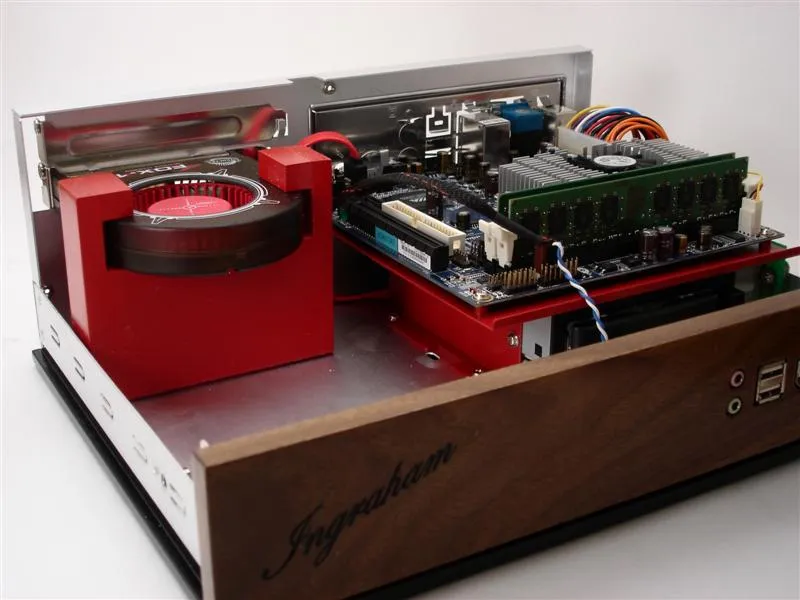
Photo: VIA Gallery from Hsintien, Taiwan, CC BY 2.0, via Wikimedia Commons
Somewhere between the fourth password-sharing crackdown and the third price hike of the year, a certain kind of streaming subscriber stopped being frustrated and started being creative.
They didn't cancel and move on. They didn't just pirate in the old-fashioned sense either. Instead, they started organizing — building shared digital spaces where communities collectively own, curate, and distribute the media they care about. Call it the streaming underground. Call it decentralized fan infrastructure. Call it a headache for every major platform's legal and business teams.
Whatever you call it, it's growing, and it's more sophisticated than most people outside these communities realize.
The Frustration Feeding the Movement
To understand why people are building alternatives, you have to understand how genuinely alienating the mainstream streaming experience has become for a significant chunk of its user base.
Subscription costs across the major platforms have climbed steadily for years. Netflix, Max, Peacock, Paramount+, Disney+ — stack them all up and you're looking at a monthly bill that rivals or exceeds what cable used to cost, which was the thing everyone was so excited to cut in the first place. Worse, the content keeps moving. A show you loved disappears from one service, reappears on another, then gets pulled entirely because of some licensing deal that makes zero sense from the outside.
Then there's the catalog problem. Streaming services have increasingly leaned into original content while licensing deals for older, beloved titles have gotten messier and more fragmented. Fans of specific genres — classic horror, international cinema, niche animation, older TV — often find that the big platforms simply don't have what they want, full stop.
That gap is exactly where these communities are planting their flags.
What These Collectives Actually Look Like
The setups vary pretty widely, but there are a few common models worth understanding.
The most straightforward version involves shared Plex or Jellyfin servers — open-source media server software that lets you host and stream a personal library. In their original intended use, these are totally legitimate tools for managing your own content. But communities have figured out how to scale them up dramatically, pooling physical storage, bandwidth costs, and the labor of maintaining a library across dozens or even hundreds of members.
Some of these shared servers are genuinely massive. Members contribute content they've purchased or ripped from physical media, and the collective ends up with a library that would be impossible for any individual to maintain alone. The experience on the user end can be surprisingly polished — custom interfaces, organized metadata, curated collections, even community-built recommendation systems that put algorithmic suggestions from major platforms to shame.
Beyond server-sharing, some communities operate more like cooperative licensing pools. Groups will collectively purchase content — digital downloads, physical media, even licensing agreements for obscure titles — and manage access communally. Others have moved into more explicitly activist territory, building pressure campaigns around preservation issues and advocating for libraries and archives to have broader digital distribution rights.
The Legal Gray Zones (And the Darker Corners)
Here's where it gets complicated, because not all of these communities are operating in the same ethical or legal space.
Shared Plex servers built from purchased content occupy a genuinely murky legal area. The core argument from participants is that they've paid for the media — they own physical discs or digital licenses — and are simply sharing access within a private community. Courts and rights holders have not consistently agreed with that framing, and the legal risk varies significantly depending on scale and how the content was acquired.
Further along the spectrum, some communities are less coy about the fact that significant portions of their libraries were never purchased by anyone in the group. These spaces shade into traditional piracy, dressed up in the language of collective ownership and media preservation. The ideological framing is often sincere — many participants genuinely believe that corporate streaming has broken the social contract of fair access to culture — but the legal reality doesn't bend for good intentions.
Rights holders have started paying attention. Several high-profile shared server communities have been shut down following DMCA actions in the past two years, and platform operators have gotten more aggressive about identifying and cutting off unusually large Plex deployments.
The Part That's Actually Interesting
Set aside the legal debate for a second, because there's a genuinely fascinating cultural experiment happening inside some of these communities.
The curation problem that corporate streaming has largely abandoned — the human, taste-driven recommendation experience that used to define video rental culture — is being actively rebuilt by these groups. Some of the larger collectives have developed remarkably sophisticated internal systems: member-curated themed collections, community voting on what to add to the library, Discord-based watch parties with real-time discussion.
In a weird way, it resembles what the early internet felt like — small communities of people who cared deeply about something, building infrastructure around shared enthusiasm rather than shareholder returns. The algorithmic monoculture that dominates mainstream streaming is almost completely absent. Discovery happens through actual human recommendation.
For a certain kind of viewer, that experience is genuinely irreplaceable. And the fact that people are willing to do significant technical and organizational work to recreate it says something important about what's missing from the polished, frictionless surface of the major platforms.
Can It Scale? Should It?
The honest answer to whether this movement represents the future of media distribution is: probably not, at least not in its current form.
The collectives that work best are small enough to maintain trust and shared values among members. The moment they scale aggressively, the legal exposure grows, the organizational complexity multiplies, and the tight community feel that made them attractive in the first place starts to dilute. There's a reason most of these groups are deliberately low-profile.
What they might represent, though, is a pressure signal. The same frustrations fueling these communities are the ones that will eventually force corporate platforms to adapt or lose subscribers in ways that matter to their bottom lines. Decentralized fan infrastructure probably won't replace Netflix. But it might be part of what eventually convinces Netflix to stop making decisions that drive people toward alternatives in the first place.
Or it won't, and the cycle of crackdown and reorganization will just keep spinning.
Either way, the fact that people care enough about their media to build their own infrastructure around it is one of the more genuinely human things happening in the entertainment space right now. Even if it gives every streaming platform's legal department a recurring nightmare.