Pixels to Paychecks: The Billion-Dollar Underground Economy Living Inside Your Favorite Games
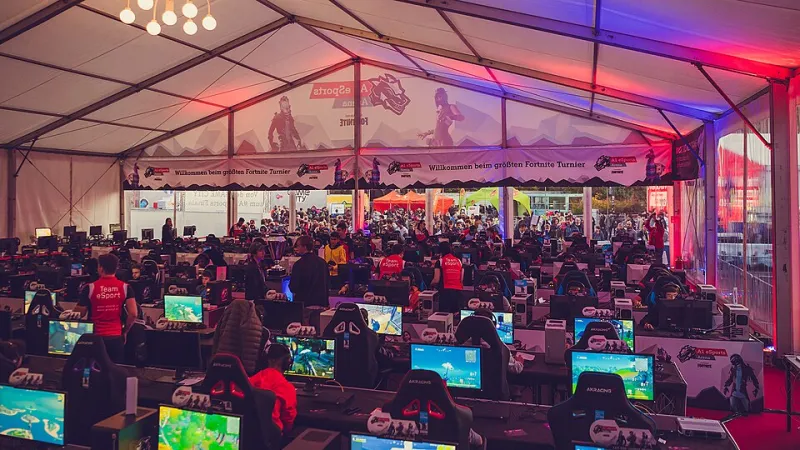
Photo: Haselman, CC BY-SA 4.0, via Wikimedia Commons
Let's start with a number that sounds made up: $384 million. That's how much money flowed through the Counter-Strike 2 skin marketplace in a single month in 2023, according to third-party market trackers. We're talking about digital cosmetics — virtual weapon finishes that don't affect gameplay in any measurable way — generating more monthly revenue than the GDP of some small island nations.
And that's just one game. One marketplace. One month.
The gaming economy has quietly become one of the most complex, layered financial ecosystems in American entertainment. It's not just about selling games anymore. It's about the entire universe of money that flows around games — through streamers, tournament organizers, skin traders, Discord communities, coaching services, and content creators who've turned their passion for pressing buttons into six and seven-figure careers.
The Tournament Money Machine
Esports prize pools get the flashiest headlines, and for good reason. The Dota 2 International tournament has handed out over $40 million in a single year, funded largely through a crowdsourcing model where fans buy in-game cosmetic bundles and a portion rolls directly into the prize pool. It's a financial structure that would have seemed insane in 2005 and is now completely normalized.
But professional esports is actually the tip of the iceberg. The real money — or at least the most widely distributed money — lives in the semi-professional and amateur layers of competitive gaming. Platforms like Battlefy and Challengermode run hundreds of smaller tournaments weekly, with prize pools ranging from a few hundred to tens of thousands of dollars. For a college kid grinding ranked matches, a $2,000 tournament win isn't life-changing, but it's real income.
Coaching has emerged as its own micro-industry within this space. Platforms like ProGuides and Gamer Sensei connect high-ranked players with paying students who want to improve. Top coaches on these platforms charge anywhere from $50 to $200 an hour — rates that would be competitive with professional tutoring in any academic subject. The skills being taught aren't trivial either: game theory, decision-making under pressure, team communication. Coaches with elite credentials can build full-time businesses without ever competing in a single official tournament.
Twitch Donations and the Creator Economy
If competitive gaming is the economy's backbone, the creator economy is its circulatory system. Twitch alone processes hundreds of millions of dollars annually in subscriptions, bits (its virtual currency), and direct donations. The platform's top streamers — names like xQc, Pokimane, and Ninja — have built personal brands worth tens of millions of dollars through a combination of subscriber revenue, sponsorships, and merchandise.
But the more interesting story is what's happening below the top tier. Mid-level streamers — people with 500 to 5,000 concurrent viewers — are building sustainable, if modest, businesses through diversified income streams that would have been impossible a decade ago. A streamer making $3,000 a month from Twitch subscriptions might layer on another $1,500 from a Patreon, $2,000 from a brand deal, and occasional income from coaching or merchandise. That's a real living wage in most of the country, built entirely on playing games and talking about them.
YouTube's gaming ecosystem runs parallel to Twitch's, with its own economy of ad revenue, channel memberships, and Super Chat payments. Creators who master both platforms — streaming live on Twitch while repurposing highlights for YouTube — can effectively double their monetization surface area without doubling their workload.
The Skin Market: Digital Assets With Real Value
We should spend more time on the skin economy because it's genuinely one of the stranger corners of modern finance.
In games like CS2, Rust, and Team Fortress 2, cosmetic items can be traded, sold, and purchased through Steam's marketplace or third-party platforms. Some rare items have sold for thousands of dollars. A "Souvenir AWP Dragon Lore" in CS2 — a rifle skin with a specific tournament provenance — has fetched upward of $150,000 in private sales. That's not a typo.
The economics here get complicated fast. Skin prices fluctuate based on supply (drop rates, case openings), demand (professional players using certain skins on stream), and market sentiment. Some players treat skin trading as an actual investment strategy, buying low during market dips and selling during tournament hype cycles. There are Discord servers with thousands of members dedicated entirely to skin market analysis.
Traditional financial regulators have started paying attention. The line between a cosmetic marketplace and an unregulated securities market gets blurry when people are making real financial decisions based on speculative value. Several countries have already moved to restrict or ban certain loot box and skin gambling mechanics. US regulators have been slower to act, but the conversation is happening.
How Traditional Entertainment Is Chasing This Audience
Hollywood and the broader entertainment industry haven't missed any of this. The audience spending money inside games is young, engaged, and willing to open their wallets for things they care about — a combination that's extremely attractive to media companies struggling to monetize younger demographics through traditional channels.
Amazon's ownership of Twitch is the most obvious play. The company has integrated Prime Gaming perks, in-game item drops, and subscription benefits to create a pipeline between its retail ecosystem and gaming audiences. It hasn't fully cracked the formula, but the strategic intent is clear.
Sports franchises — NFL teams, NBA franchises, European soccer clubs — have been buying into esports organizations for years, betting that brand association with gaming will help them stay relevant with Gen Z. The results have been mixed, but the investment continues.
Streaming platforms are licensing gaming content, funding gaming documentaries, and building original series around game IP. Netflix's Arcane (based on League of Legends) became one of the streamer's most-watched original series, proving that gaming audiences will show up for high-quality adaptations of their favorite universes.
The Feed Runs on Passion
What makes the gaming economy different from most entertainment economies is that it's largely powered by genuine enthusiasm rather than manufactured demand. The person spending $20 on a skin, donating to a streamer, or paying for a coaching session isn't doing it because a marketing campaign told them to. They're doing it because they're deeply invested in a world they've chosen to inhabit.
That authenticity is the whole thing. It's what makes the gaming economy resilient, weird, and honestly kind of inspiring. People found something they loved, built communities around it, and then — almost accidentally — built an economy too.
The pixels were always worth something. It just took a while for everyone else to figure it out.